Aggregate Inventory Management: Why Tracking Stockpiles Matters
Aggregate inventory tracking is a fundamental part of running an efficient asphalt or concrete plant. Raw materials — aggregates, sand, RAP, liquid asphalt, cement, and additives — represent some of the largest costs in your operation. When stockpile data is inaccurate, the consequences range from emergency material orders and production delays to excess inventory tying up capital. This guide covers practical approaches to tracking aggregate stockpiles and raw material inventory at your plant.
The Real Cost of Poor Inventory Tracking
Many plants rely on visual estimates to judge stockpile levels. An experienced operator can often eyeball a pile and give a rough tonnage, but these estimates can be off by 10 to 20 percent or more. Over the course of a season, that margin of error adds up.
Consider the impact:
- Emergency orders — Rush deliveries of aggregate or liquid AC cost significantly more than planned shipments.
- Production shutdowns — Running out of a key material mid-run means idle crews and missed delivery windows.
- Overstock — Excess inventory occupies yard space and ties up working capital that could be deployed elsewhere.
- Quality issues — Old or contaminated stockpiles can affect mix quality if they are not identified and managed.
Methods for Tracking Aggregate Stockpiles
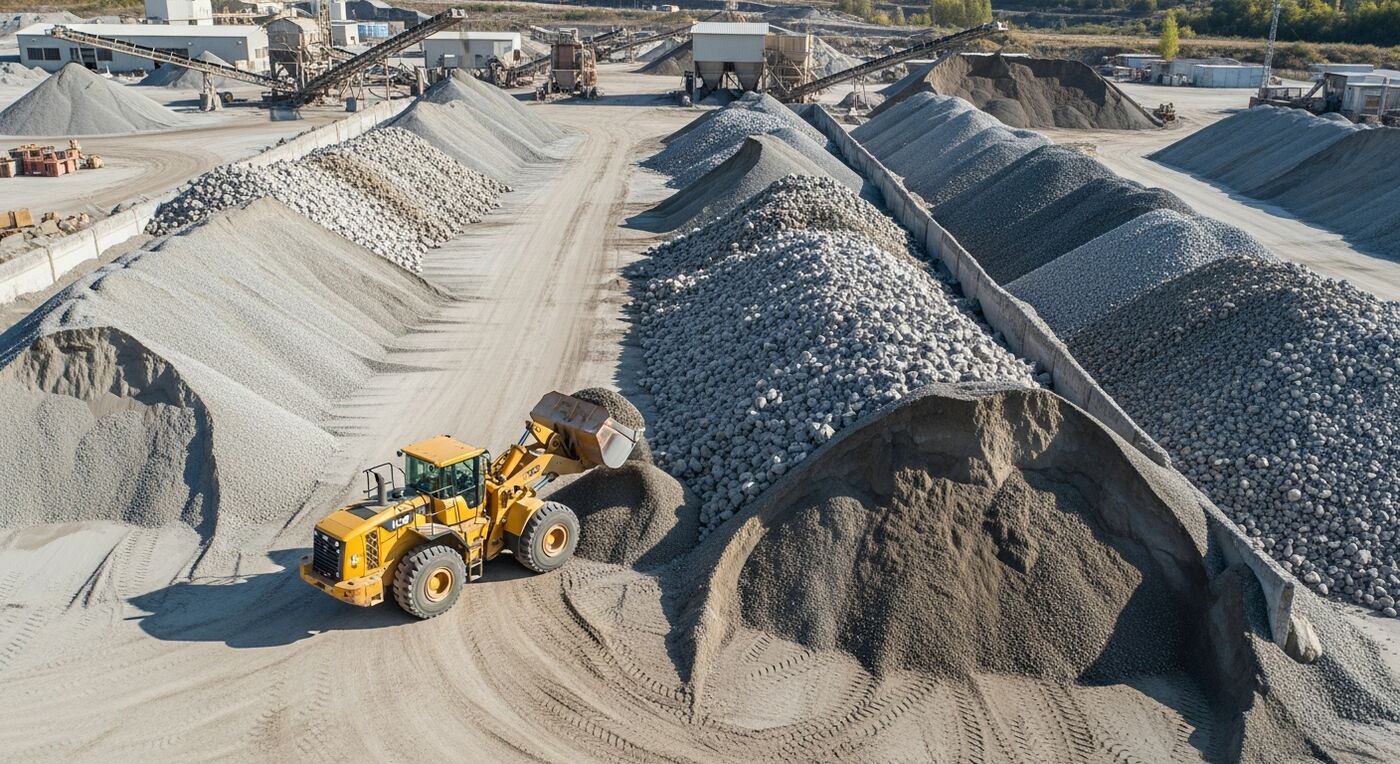
1. Visual Estimation
The simplest method is walking the yard and visually estimating stockpile volumes. While this costs nothing, it is the least accurate approach. Visual estimation works as a daily sanity check but should not be the sole method for inventory management.
2. Geometric Measurement
Measuring stockpile dimensions — height, base width, and length — and applying geometric formulas gives a more accurate estimate than visual inspection alone. Conical piles can be calculated using the formula for the volume of a cone. This method requires a tape measure and some math, and accuracy improves with practice.
3. Loader Bucket Counting
Tracking the number of loader buckets removed from a stockpile, combined with the known bucket capacity and material density, provides a running tally of material used. This method works well when loaders are the primary way material moves from stockpile to cold feed bins.
4. Weigh Scale Data
If your plant has truck scales, you can track incoming material deliveries by weight. Combining delivery records with production records (tons of mix produced multiplied by the aggregate percentage in each mix design) gives a calculated inventory balance. This approach is accurate but requires consistent record-keeping.
5. Drone and LiDAR Surveys
For larger operations, drone-based volumetric surveys using photogrammetry or LiDAR provide highly accurate stockpile measurements. These surveys can map your entire yard in a matter of hours and produce 3D models with volume calculations. The cost of drone surveys has dropped significantly in recent years, making this technology accessible to mid-sized operations.
6. Conveyor Belt Scales
Installing belt scales on conveyors feeding the plant provides continuous, real-time measurement of material flow. This data can be integrated with plant control systems to give an accurate picture of material consumption throughout the production day.
Best Practices for Material Inventory Management
Establish a Tracking Routine
Choose a method (or combination of methods) and stick with it. The most important thing is consistency. A weekly inventory check using geometric measurement is better than sporadic drone surveys. Daily checks during peak season ensure you catch shortages before they become emergencies.
Reconcile Regularly
Compare your calculated inventory (deliveries minus usage) with physical measurements on a regular basis. Discrepancies may indicate measurement errors, material loss, contamination, or theft. Regular reconciliation keeps your numbers honest.
Connect Inventory to Scheduling
Inventory tracking is most useful when it feeds into your production planning. If you know you have 2,000 tons of a particular aggregate and your upcoming schedule calls for 3,000 tons this week, you can order the shortfall in advance rather than scrambling at the last minute.
PlantDemand’s scheduling platform helps plant managers plan production by mix design and tonnage, which makes it easier to forecast material needs and coordinate with suppliers. When your schedule and your inventory data work together, you can optimize ordering and reduce waste.
Track Liquid AC and Additives Too
Aggregate stockpiles are the most visible inventory item, but do not neglect liquid asphalt, cement, additives, fibers, and rejuvenators. These materials often have longer lead times and may require temperature-controlled storage. Tank gauges, flow meters, and delivery ticket reconciliation are common methods for tracking liquid inventories.
Technology and Tools for Inventory Tracking
Several approaches can help modernize your inventory management:
- Spreadsheets — A well-maintained spreadsheet with delivery and usage data provides a basic but functional tracking system.
- Plant control system data — Many modern plant controllers log material usage by mix and batch, which can be exported for inventory reconciliation.
- Scheduling software — Platforms like PlantDemand let you plan production by mix and tonnage, giving you a forward-looking view of material demand.
- Drone survey services — Third-party providers can conduct monthly or quarterly stockpile surveys at a reasonable cost.
Start Improving Your Inventory Tracking Today
Better aggregate inventory management does not require a massive investment. Start by establishing a consistent tracking routine, reconciling your numbers regularly, and connecting your inventory data to your production schedule. Over time, you will find that fewer emergency orders, less downtime, and better planning more than pay for the effort.
If you are looking to connect your scheduling with your material planning, try PlantDemand free and see how planned production data can improve your inventory management.
Frequently Asked Questions
What is the most accurate way to track aggregate stockpiles?
Drone-based volumetric surveys using photogrammetry or LiDAR are the most accurate, often within 1 to 2 percent. Conveyor belt scales and combined scale-plus-production-record reconciliation are also highly accurate for ongoing tracking.
How accurate are visual stockpile estimates?
Visual estimates can be off by 10 to 20 percent or more, even from experienced operators. Visual inspection is useful as a daily sanity check but should never be the sole inventory tracking method for an active production operation.
How often should I reconcile my aggregate inventory?
During peak season, perform daily quick checks and a more thorough weekly reconciliation that compares calculated balances against measured stockpile volumes. During the off-season, monthly reconciliation is usually sufficient.
This guide is part of the PlantDemand platform hub for asphalt plant operations, scheduling, and sales management.